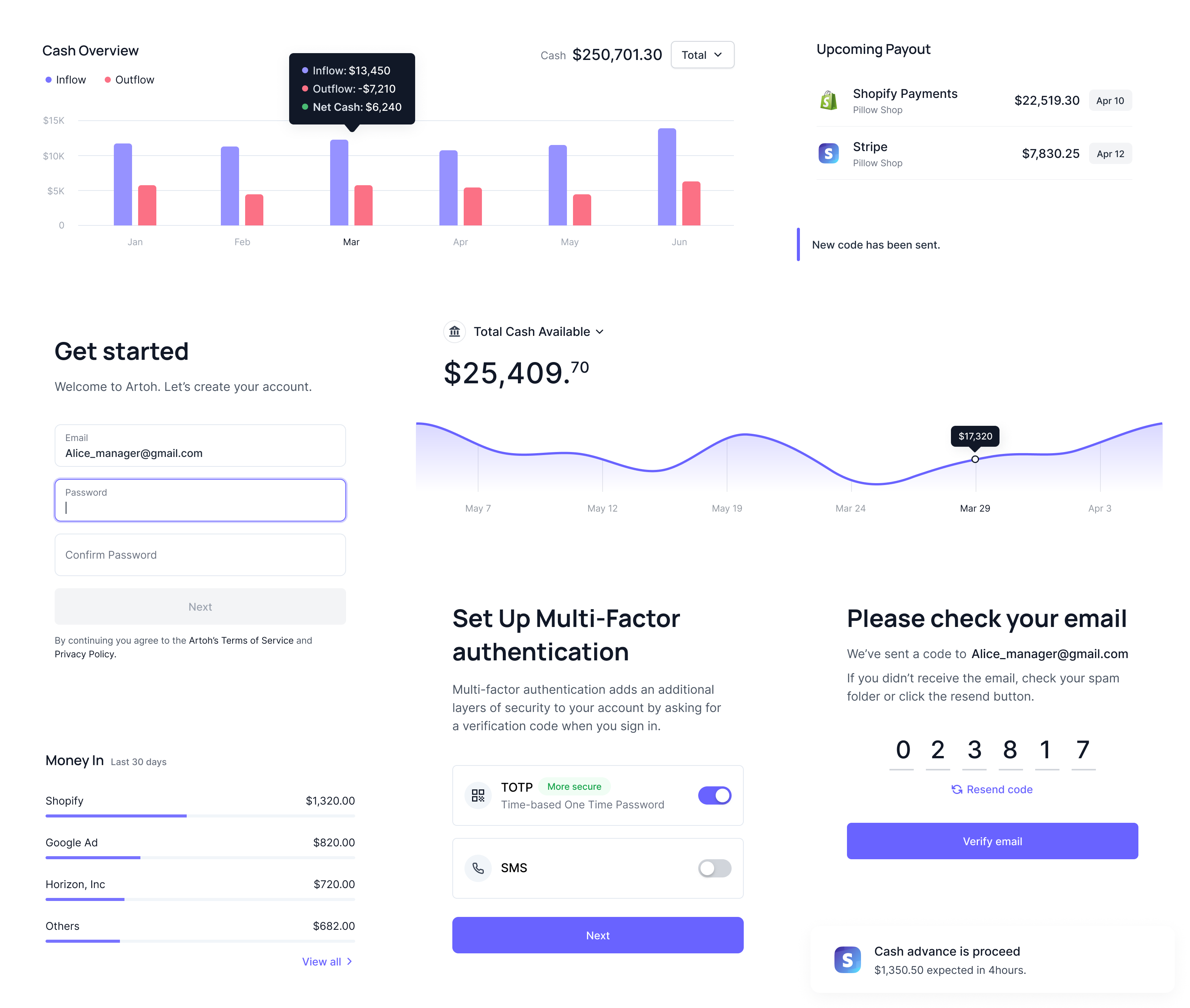
Dashboard web-app design
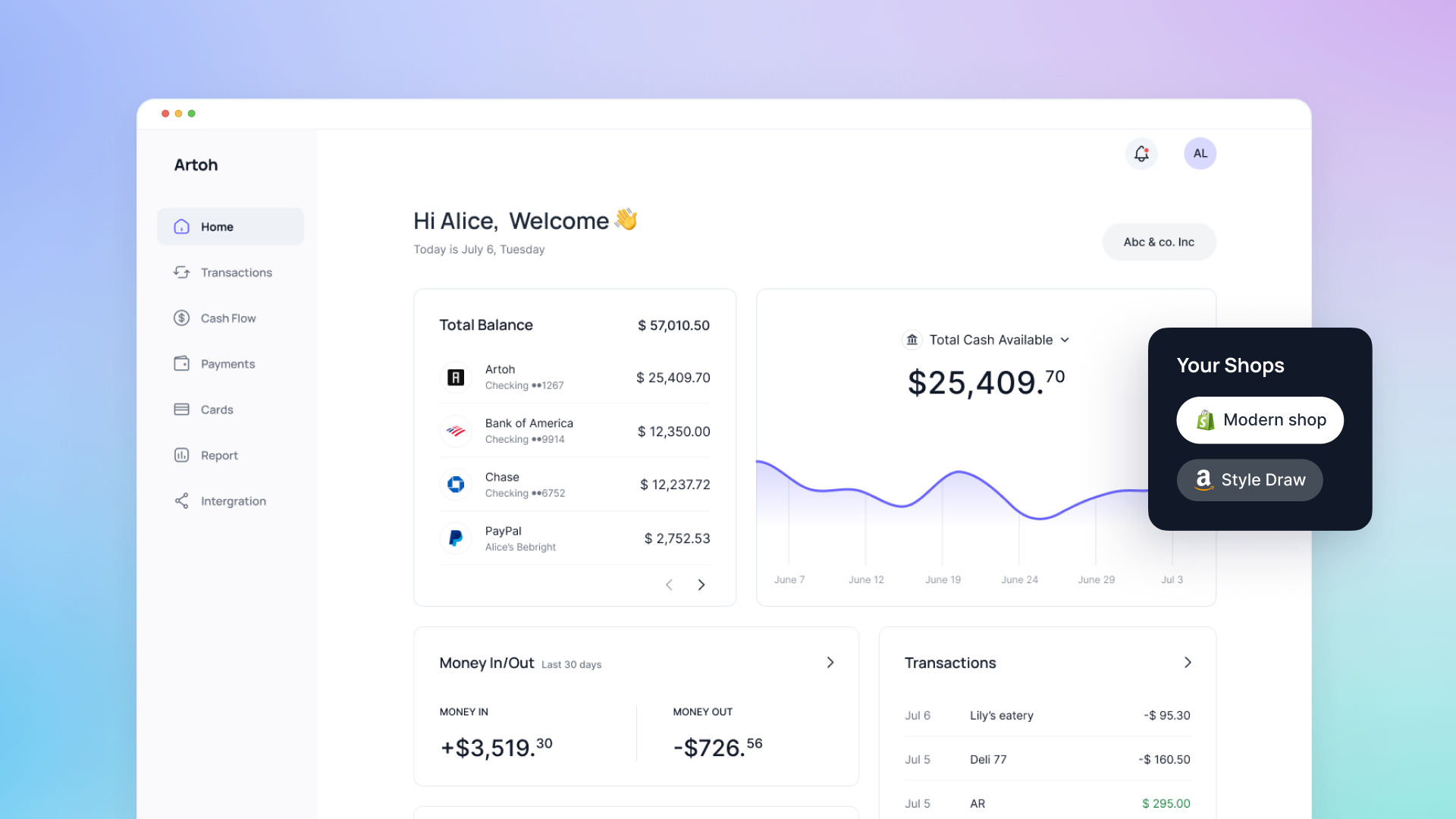
Artoh is an all-in-one finance solution built for E-commerce brands. Providing financial projections requires data from a business owner’s platform. We will offer differentiated features to attract our target users, who mostly use Shopify.
Information architecture, Wireframe, Prototype, Interaction, Web responsive design, Design system
Four months, April-July 2022
Provide financial banking services for e-commerce
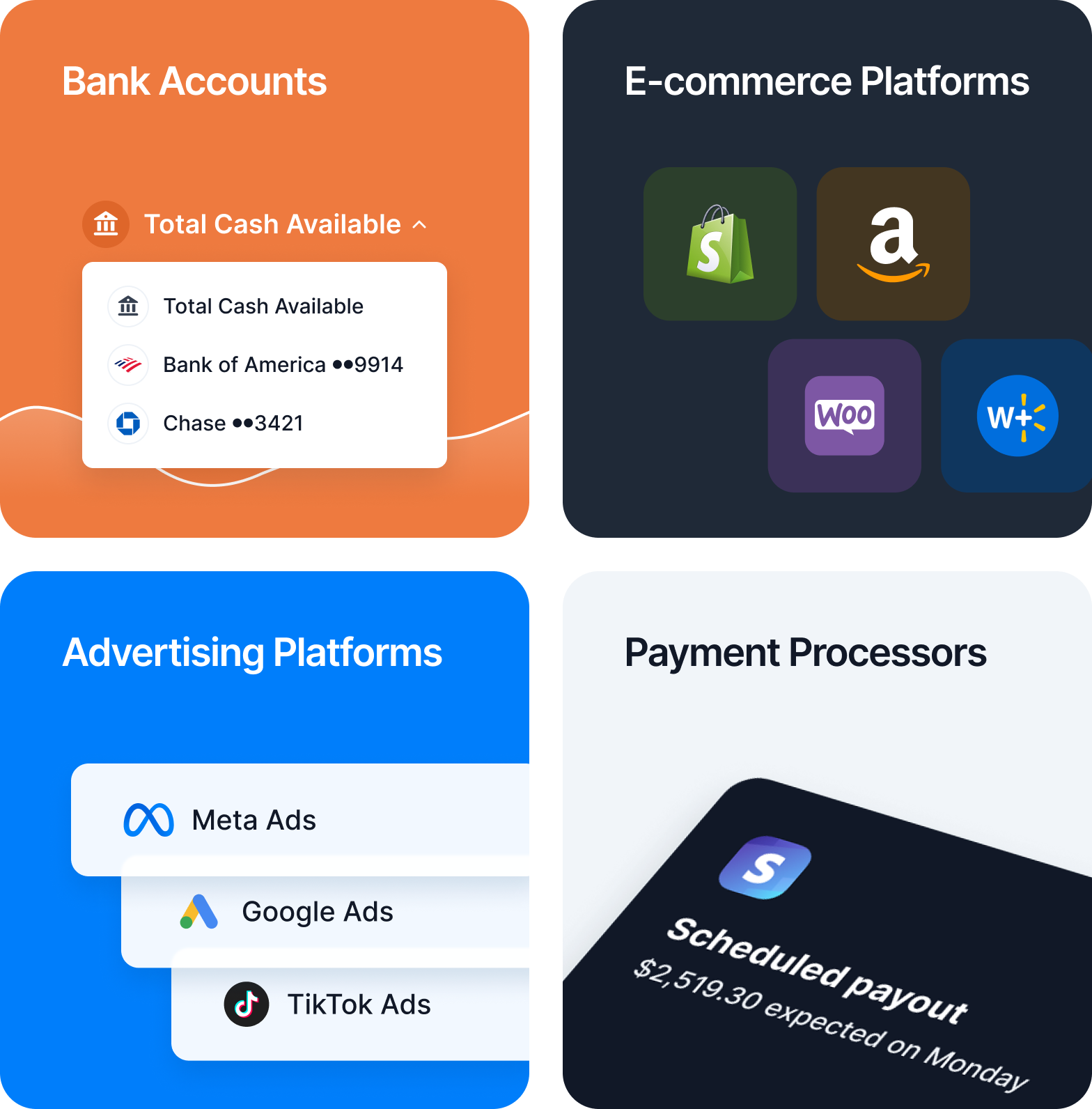
Many e-commerce businesses are using platforms such as Shopify, Amazon, Walmart, Etsy. Shopify is used by more than 1.75 million merchants around the world, but they lack apps in Shopify app store for generating accurate cash flow metrics to effectively manage their businesses.Providing an all-in-one place to connect bank accounts, payment processes and advertisement platforms will add business value by helping customers to take control.
Understanding demand of users
She is the head of DTC at Big Island Coffee Roasters and manages operations including finance and advertising. Her pain point is:
1) She spends 3-5 hours weekly pulling data from 12 different platforms to create a lot of reports for her teams.
2) It takes 2-3 weeks to do financial planning for the next period.
She is the Founder of Tuck and Bundle designed for babies. Her pain point is:
1) She sells products on Shopify, Amazon, Walmart and Etsy. She tried many softwares including Triplewhale, one of the best-known Analytics tool for Shopify owners.
2) She is having a hard time finding the tool that connects Shopify and Amazon efficiently. Triplewhale doesn’t provide Amazon integration.
He is running a business selling gaming monitors. His pain point and need are:
1) The products are sold on several platforms, especially it's super important to look through Amazon.
2) It is tough to keep track of advertising, for which he uses all three of Facebook, Instagram and Google.
3) A table showing how much cash balance is left daily is important since unexpected payment often occurs running a business.
Track everything in one place
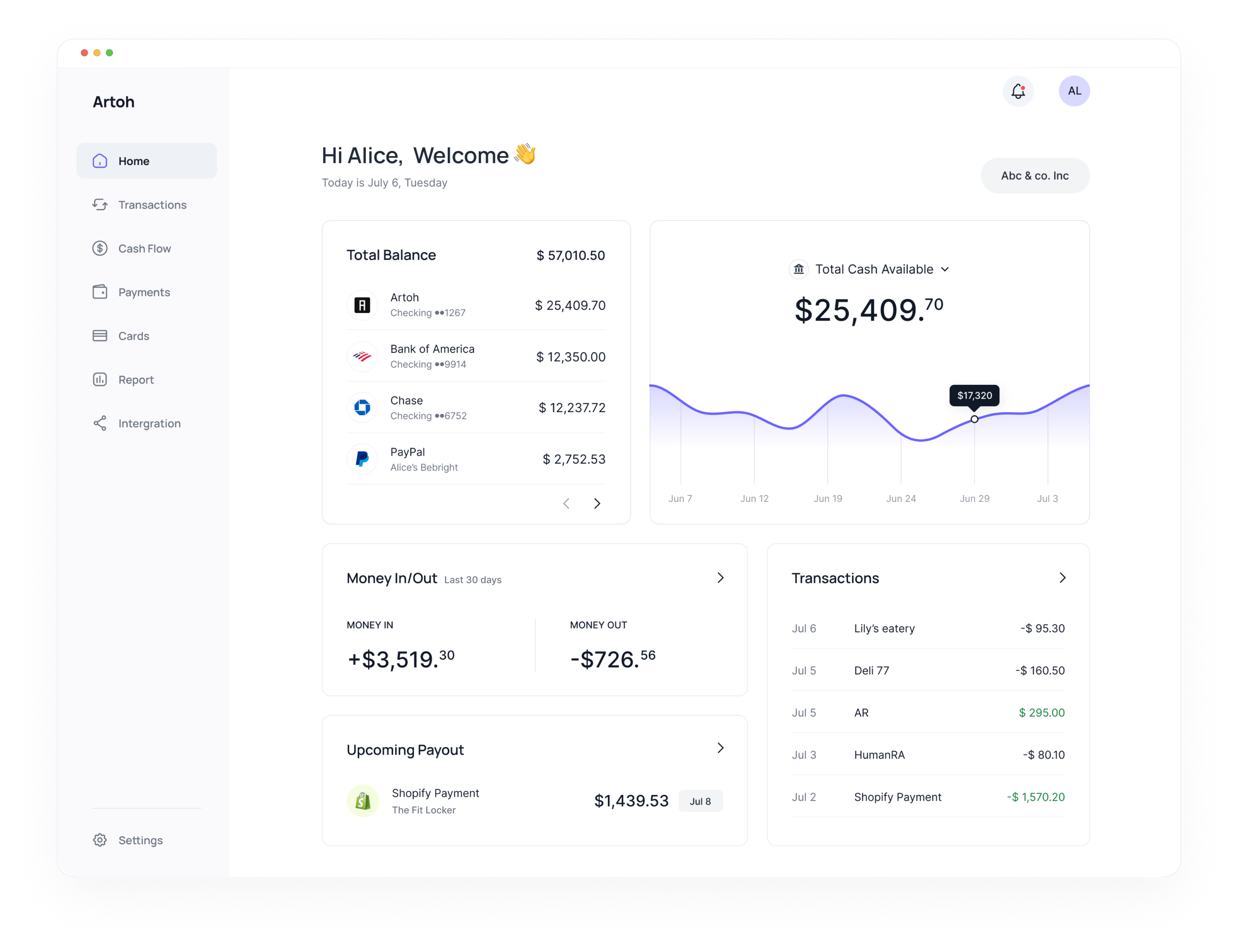
Bringing all banks and payment processors into one place will allow users to check all of current balance, upcoming payments, and projected cash flow. Users can track their KPIs and manage their cash flows in this product. These features provide a complete view of business performance, not provided by competitors. Integration is the key selling-point.
integrating multiple platforms
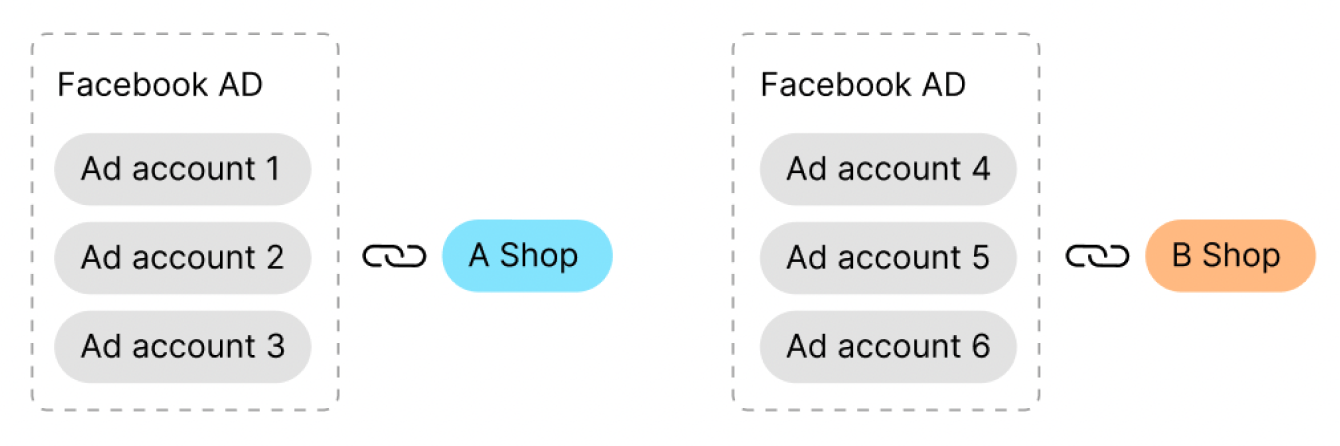
Several products already provide integration for multiple e-commerce platforms, but they generally connect to only one account. How can a user connect stores on multiple platforms? And since users often use multiple ad platforms, how can users connect multiple advertising platforms to their shops?
Streamline the user flow
The priority is easy platform integration with minimal effort. Connecting multiple advertising accounts to shops is the most daunting part, and a likely source of user confusion.
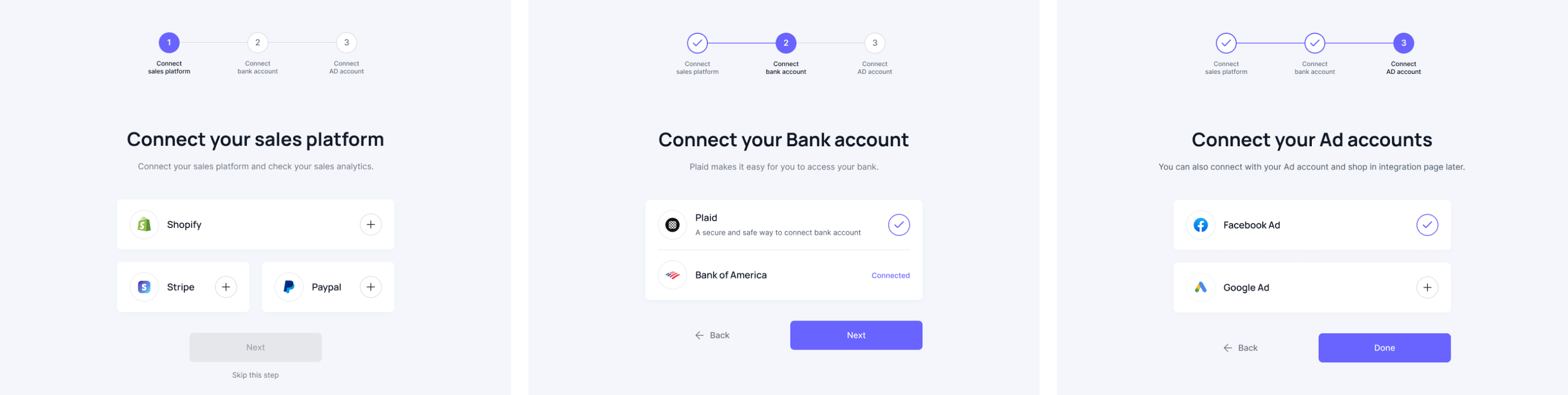
1) Platform integration in onboarding process
-Clear instructions and a progress bar will guide a user.
-Reduce the number of steps, and provide a skip option that allows users to proceed after reviewing the product value.
-Display the bank name after completing the connection so a user can easily see the result.
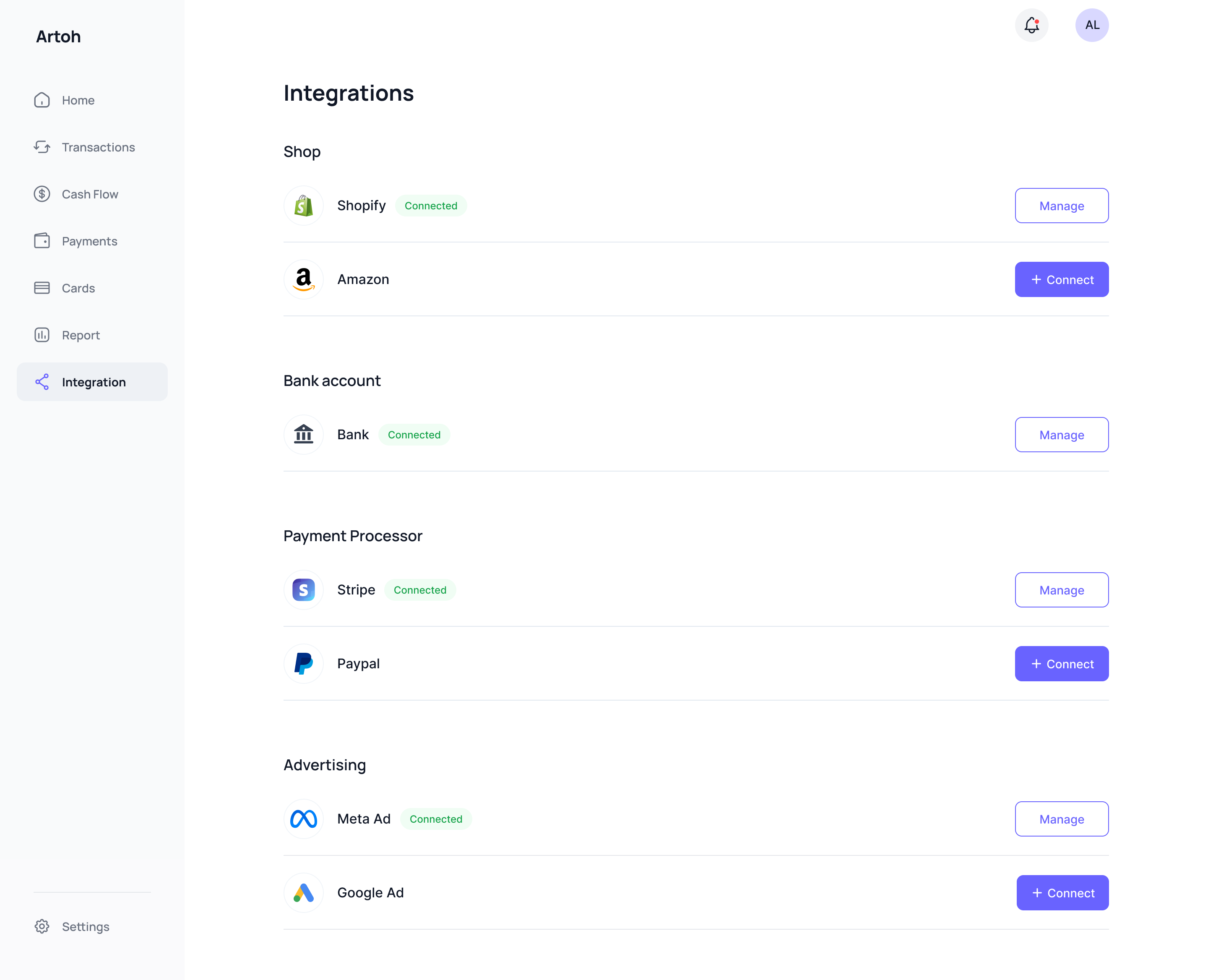
2) Show all platforms on one page
-Streamline a single-screen view to easy scan.
-Provide a manage button for connecting additional platforms and managing them individually.
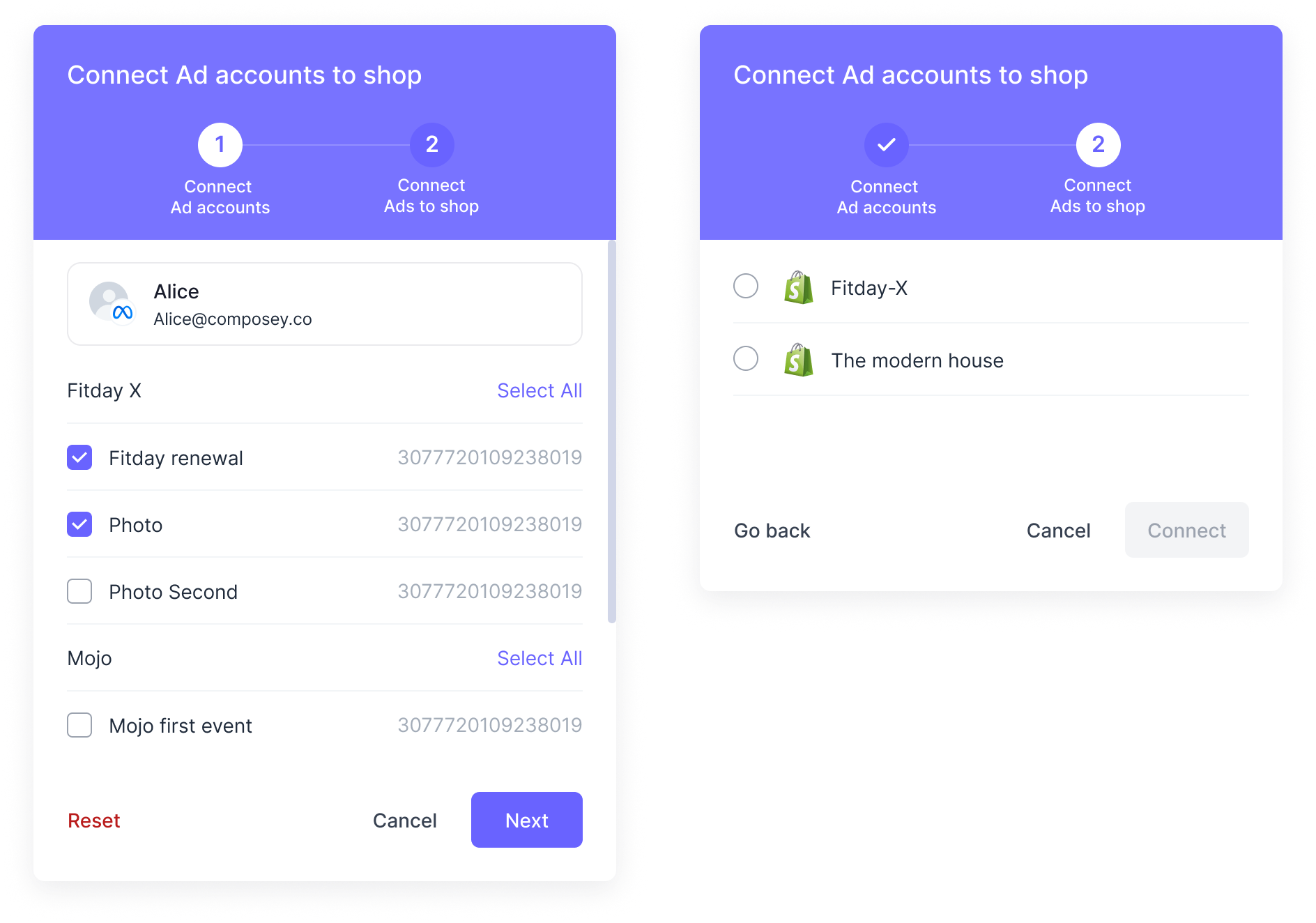
3) Connecting ads to shops
A two-step dialog is necessary for the process so that the user can identify what step will be next. A user can select several ad accounts and connect to a shop in the process. Display the purpose of the dialog as a title, and use the brand color to distinguish the process step.
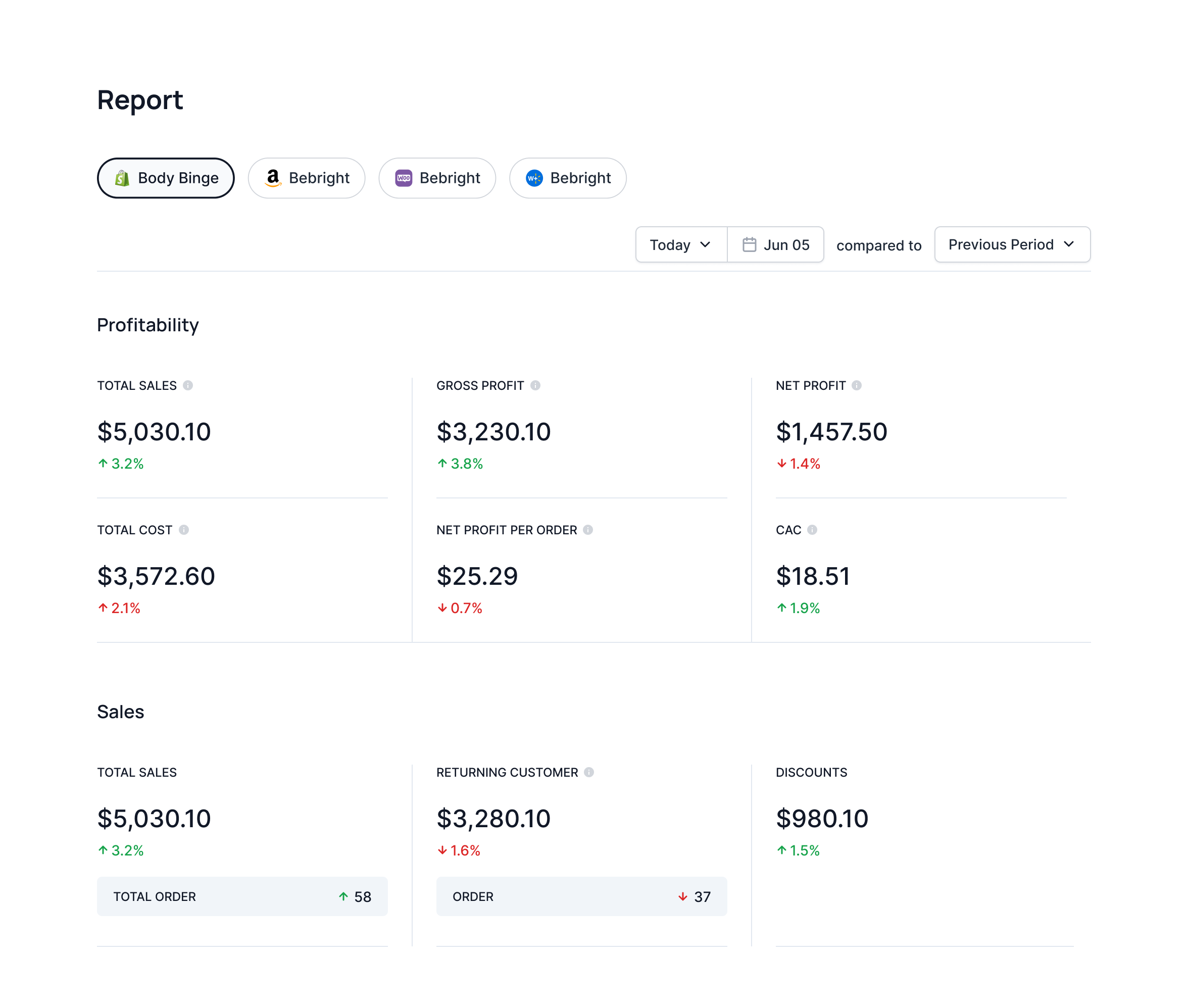
4) Track KPIs from multiple shops in one location
After completing the integration, the user has a complete view of performance. Reports covering all stores will allow a user to measure the entire business performance.
Design problems were often more complex, or have more user flow, compared to the B2C project I worked on so far. Therefore, it was crucial to think about concise and minimalistic solutions. In addition, I had to consider that engineering constraints sometimes hold more weight when implementing features.
The number of user segmentations can be limited at first; more functions need to be covered as target groups expand in the future. It may cause complexity in the design guide system. Considering reusable and scalable design systems remains to be done.